
Qiu Xiaofei
The Theater of Wither and Thrive
12 February – 18 April 2026
New York, 22nd Street
Opening Reception
12 February, 6 – 8 pm
Dates
12 February – 18 April 2026
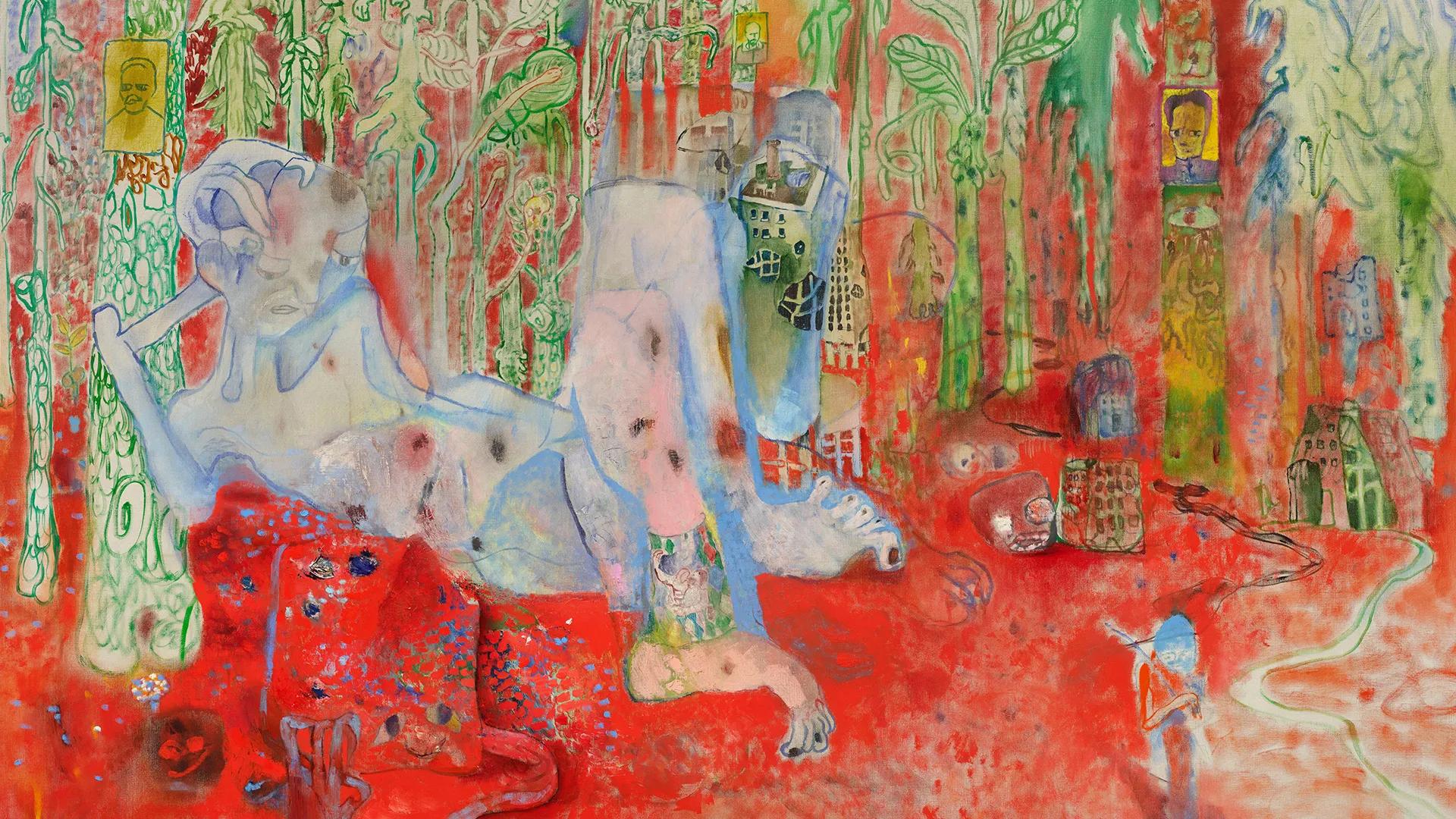
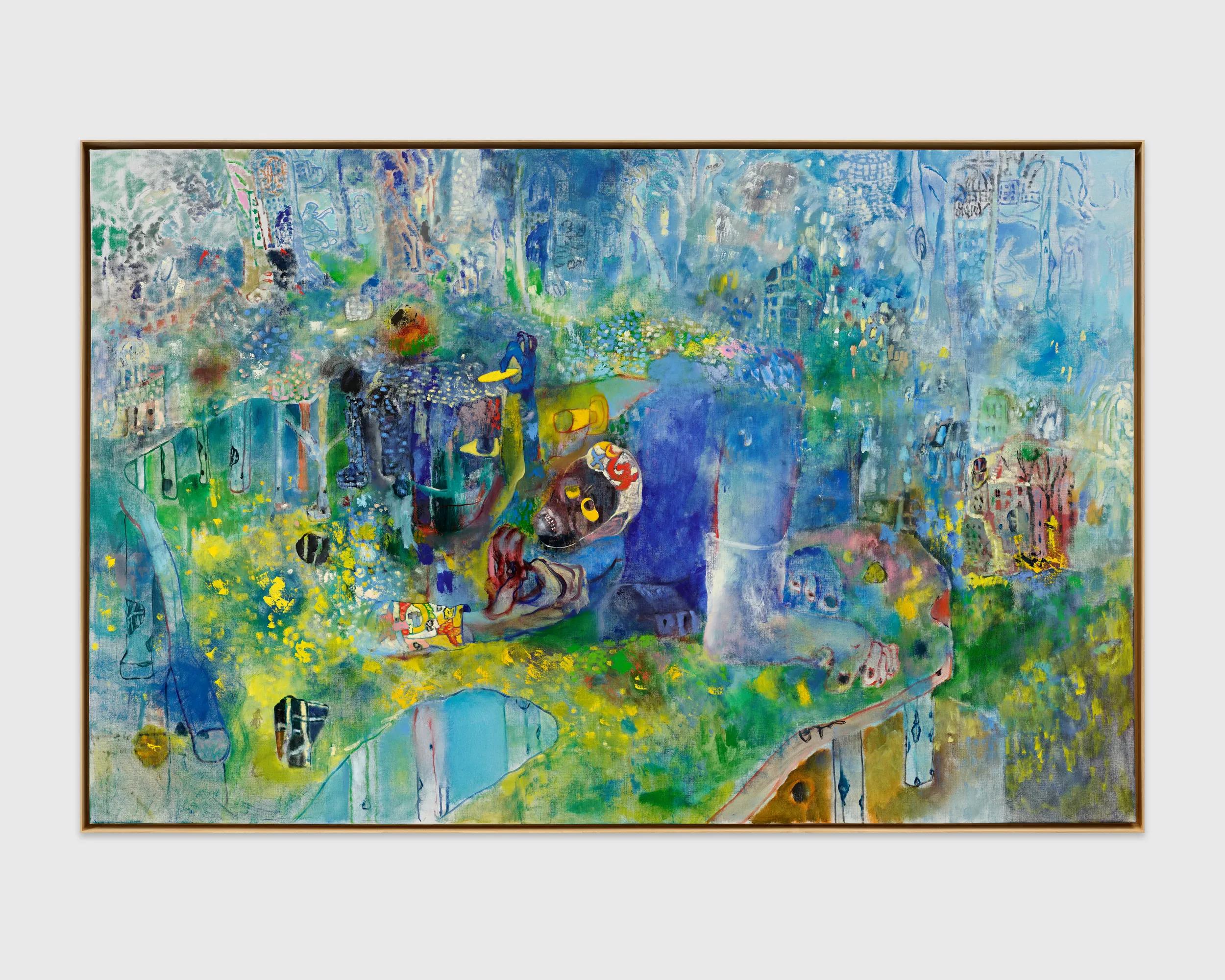
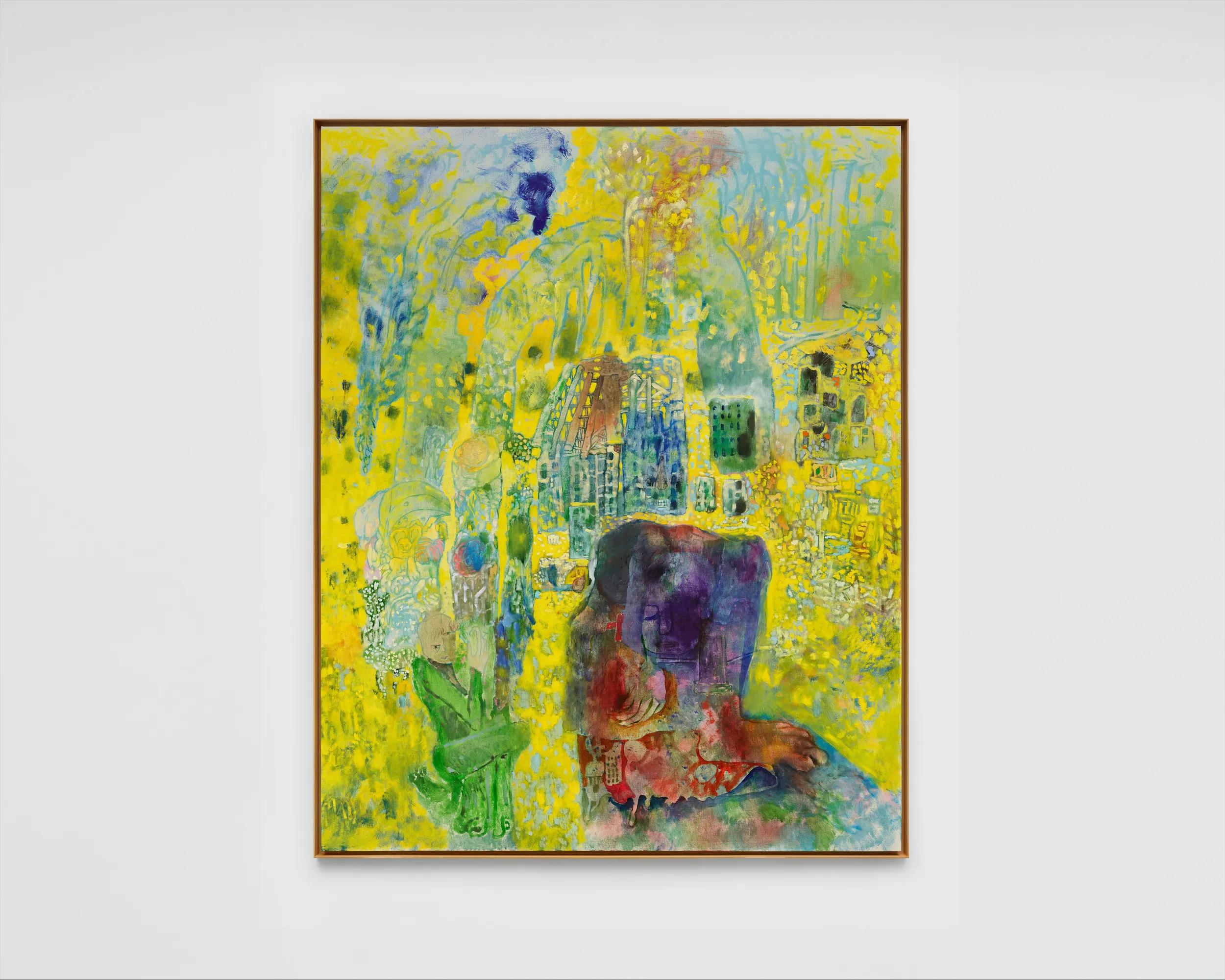
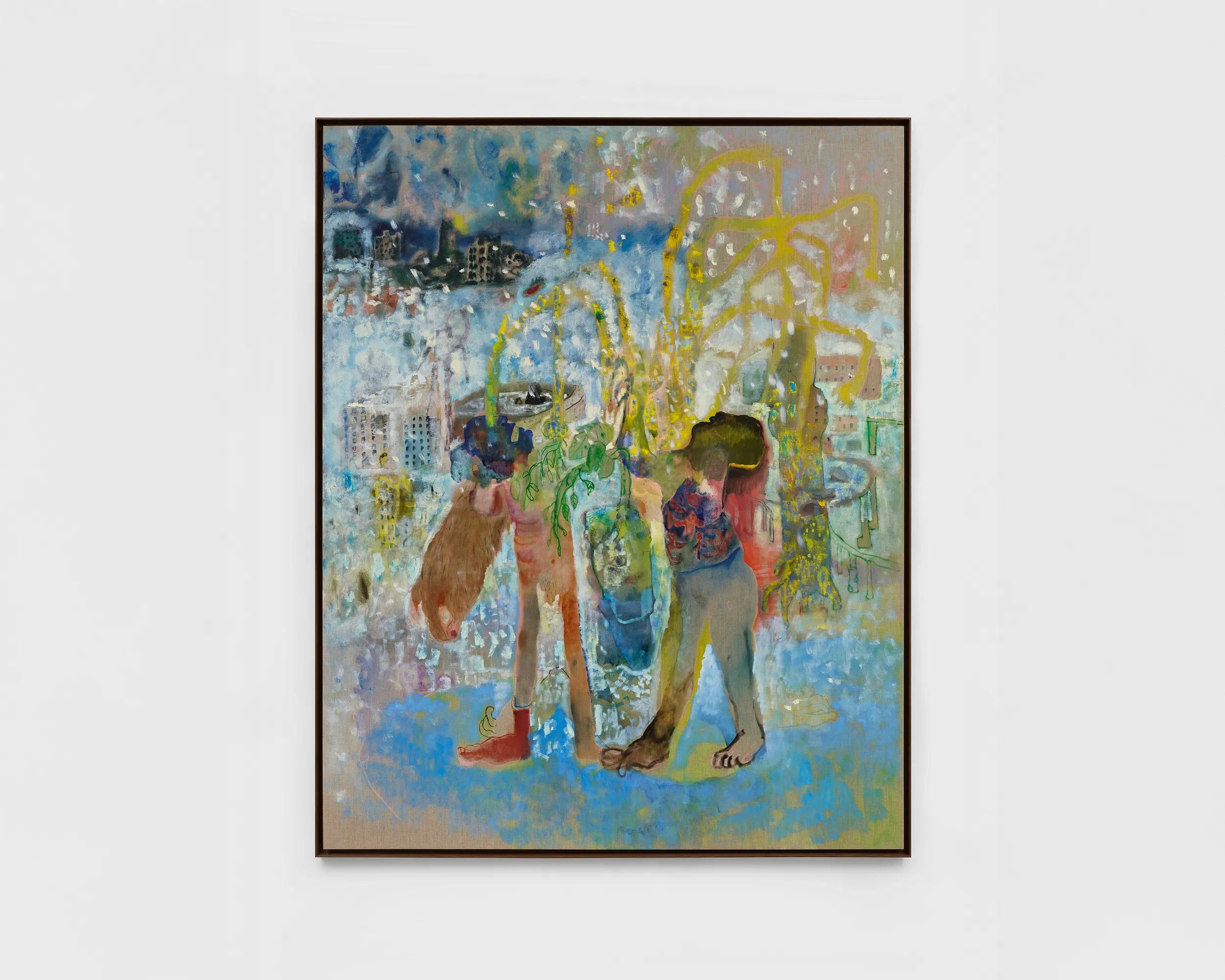
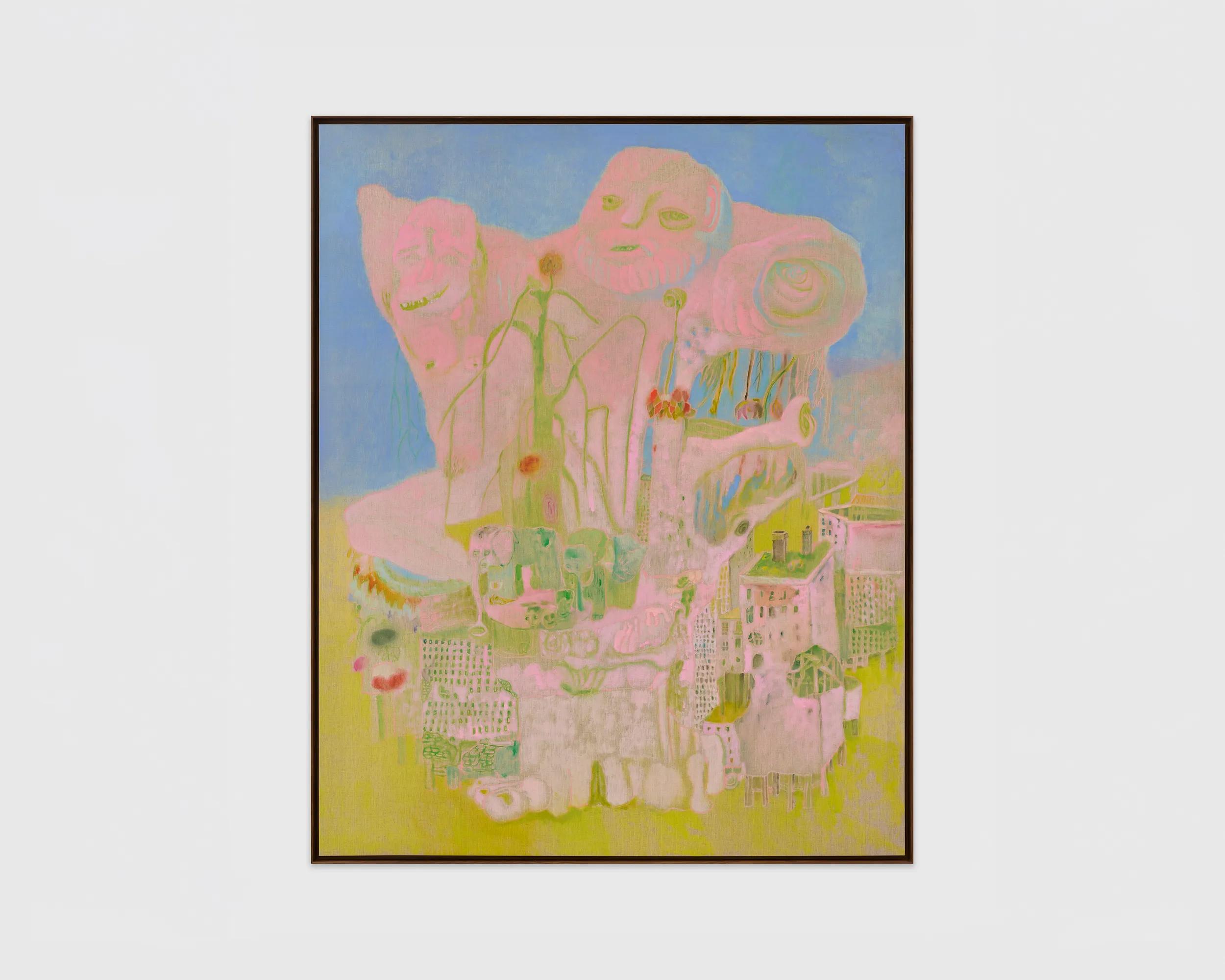
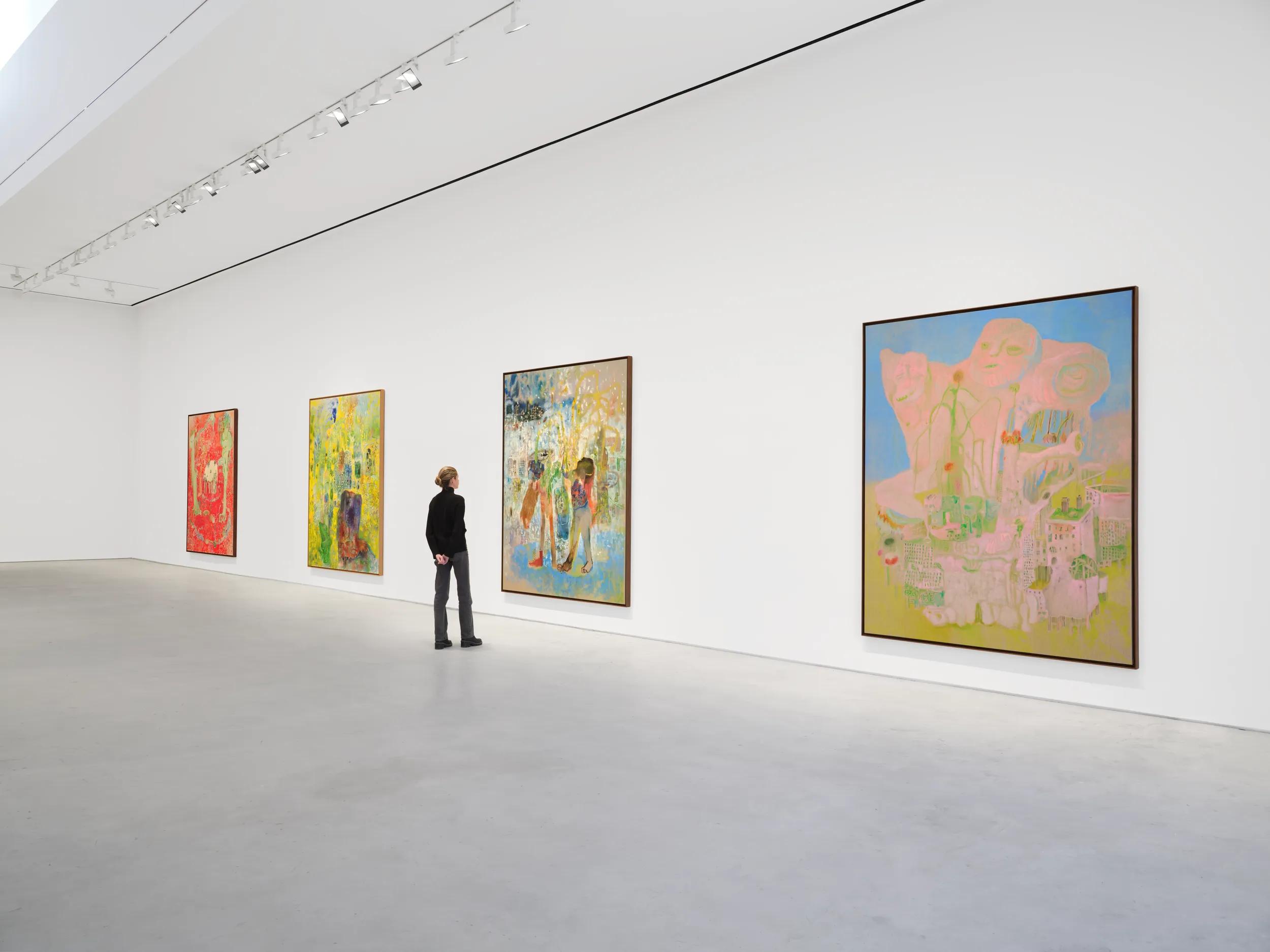
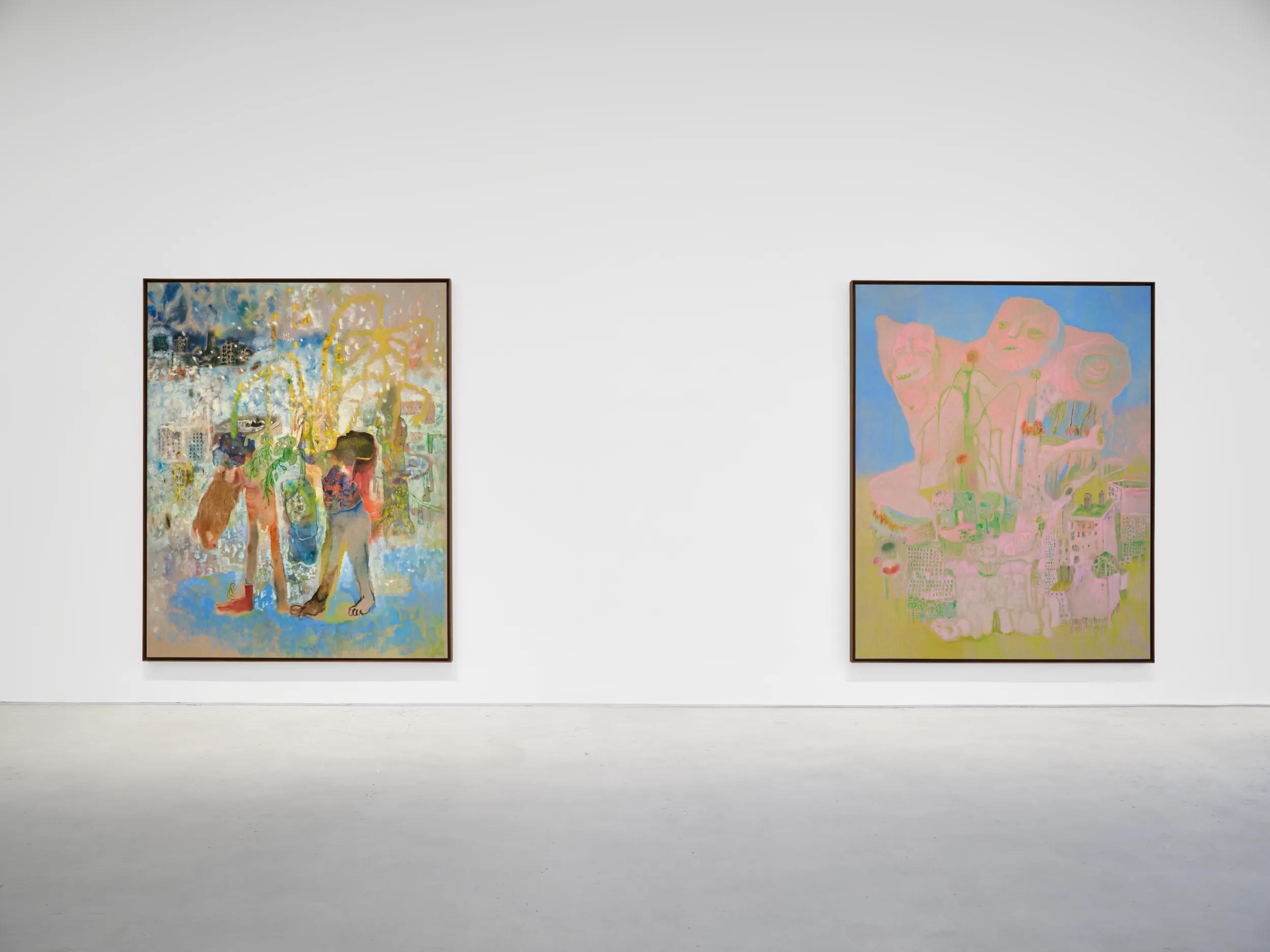
Qiu Xiaofei presents new paintings and works on paper inspired by his discovery of previously unknown family photographs—a cache of images uncovered after the death of the artist’s father. With ‘The Theater of Wither and Thrive,’ Qiu considers the ceaseless evolution of the world and the ways in which that unpredictable process intersects with the subtle and elusive formation of personal memory.
His work gives shape to these phenomena, drawing on Chinese cultural and philosophical traditions, as well as the influence of poets Robert Lowell and Emily Dickinson. Nostalgia, loss and wonder are distilled into compositions that suggest the vastness of the theater of life: presence and absence, prosperity and decline, grand histories and individual emotions gyre in the tidal dramas of human experience.
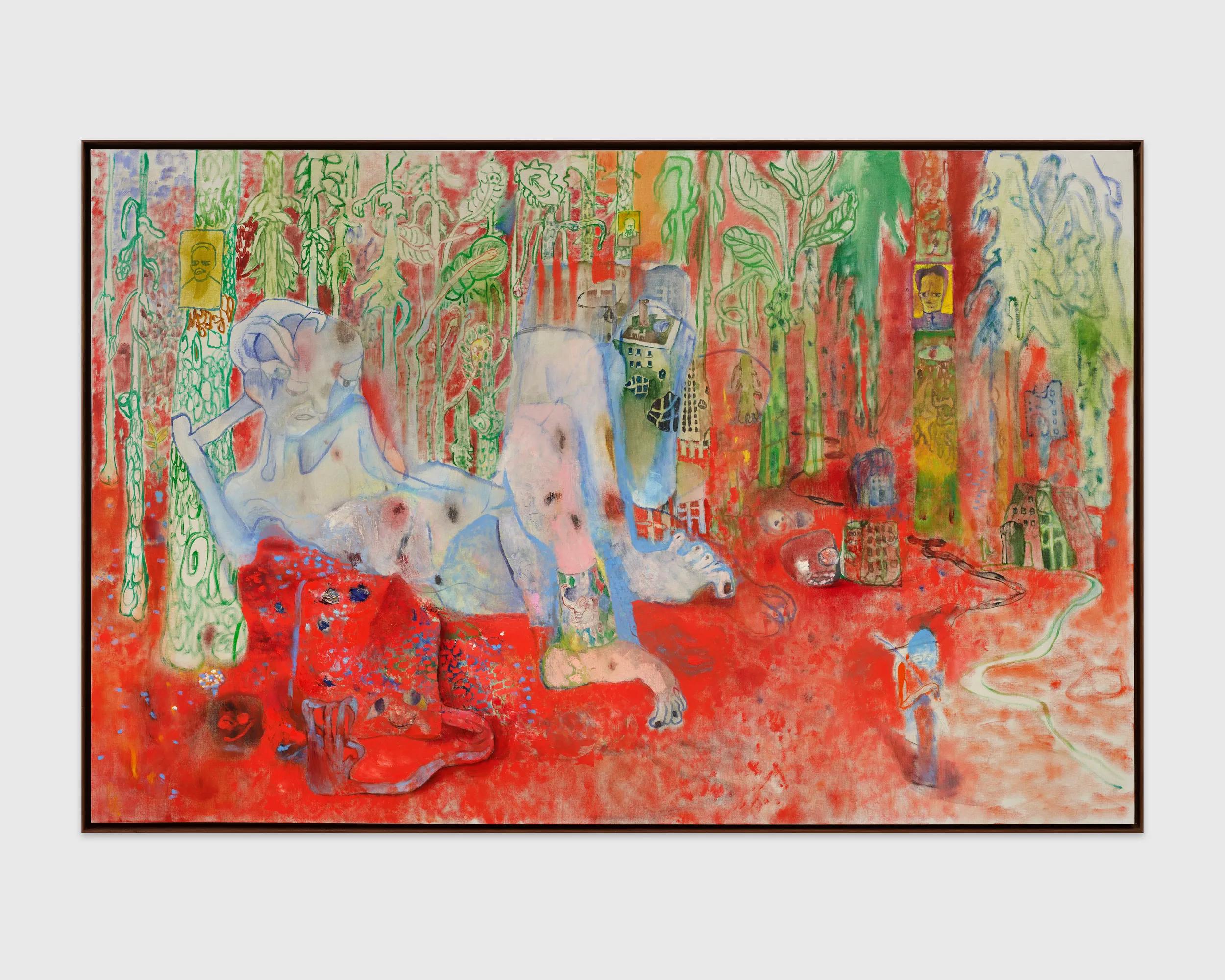
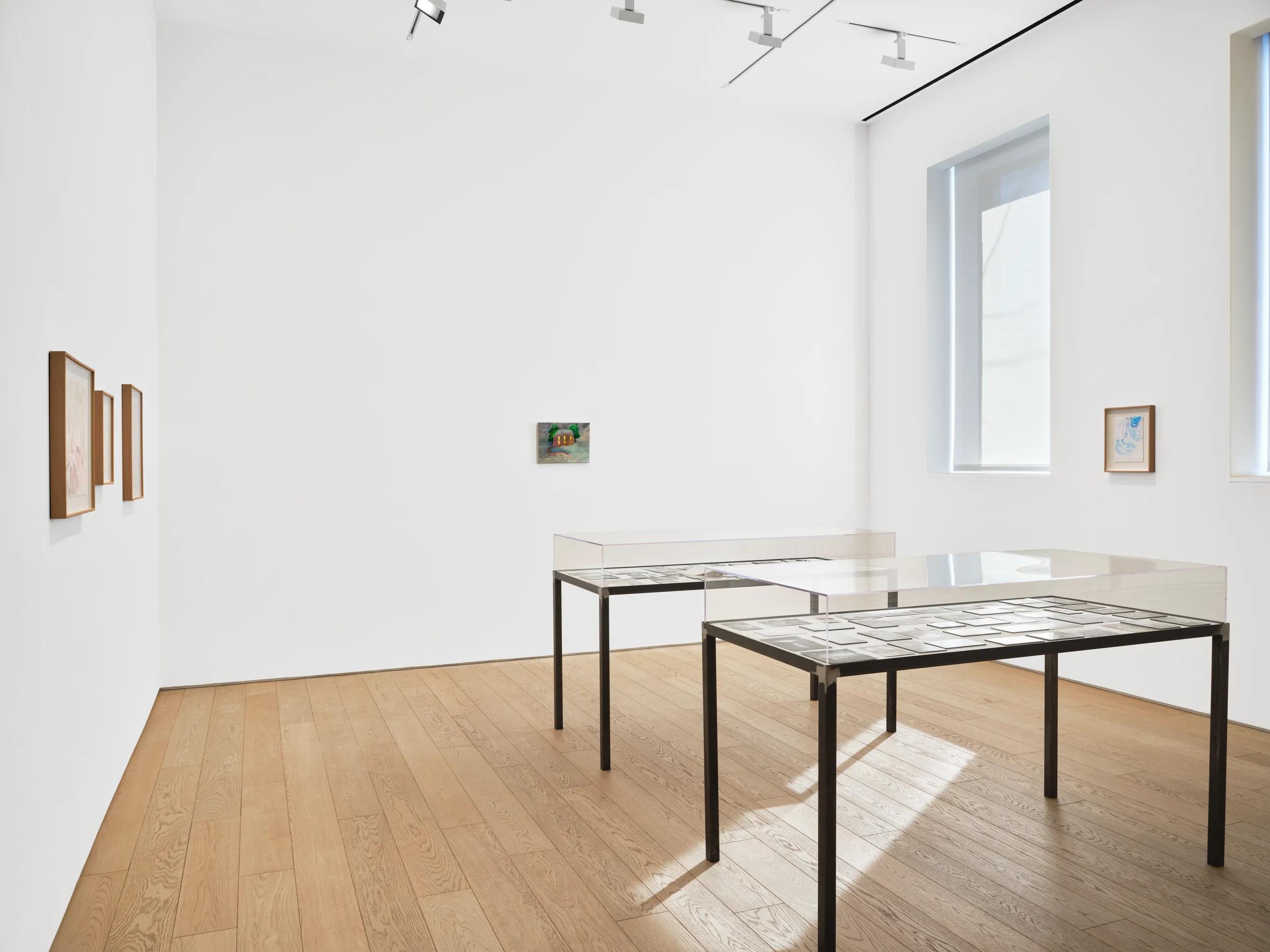
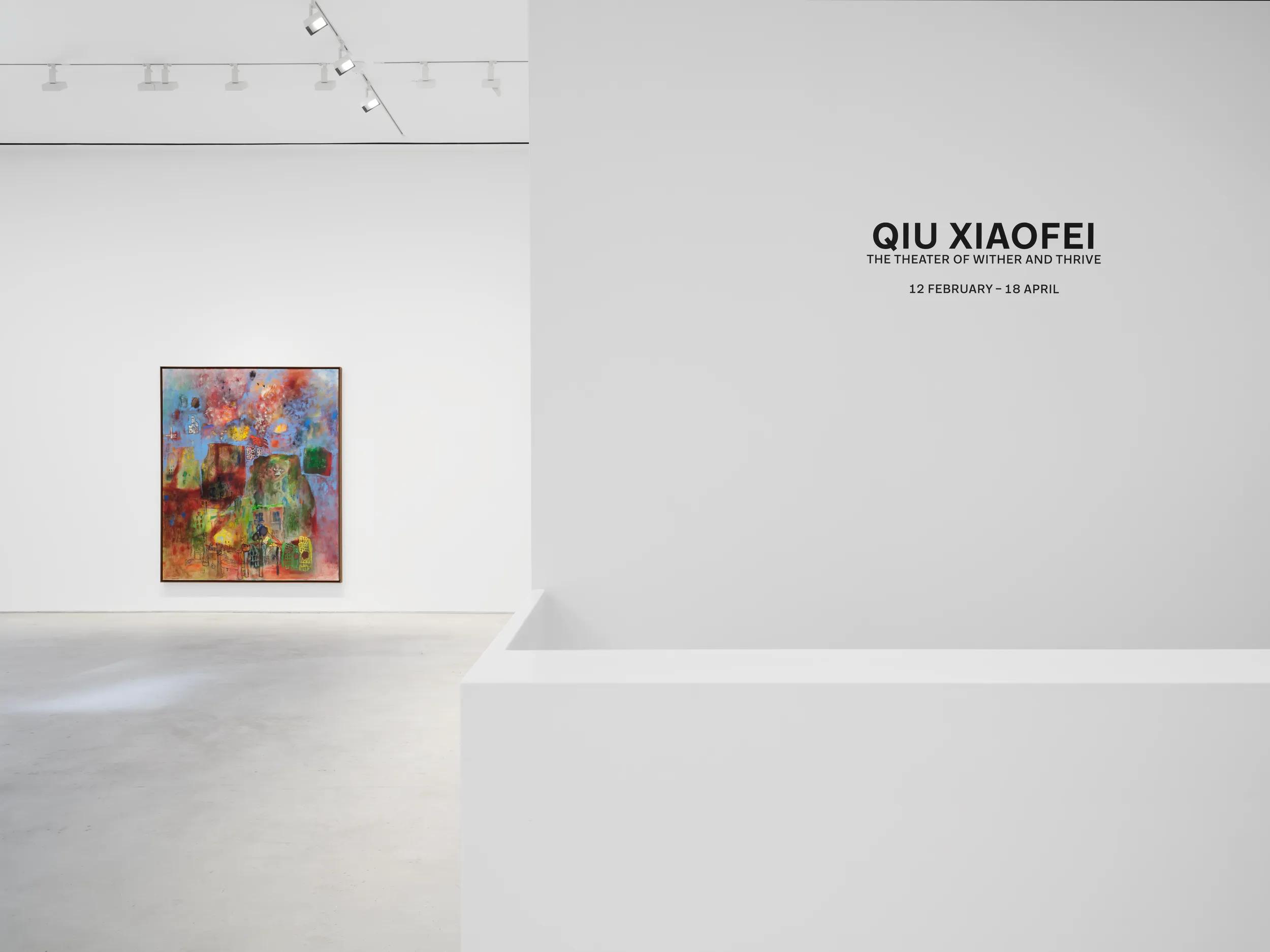
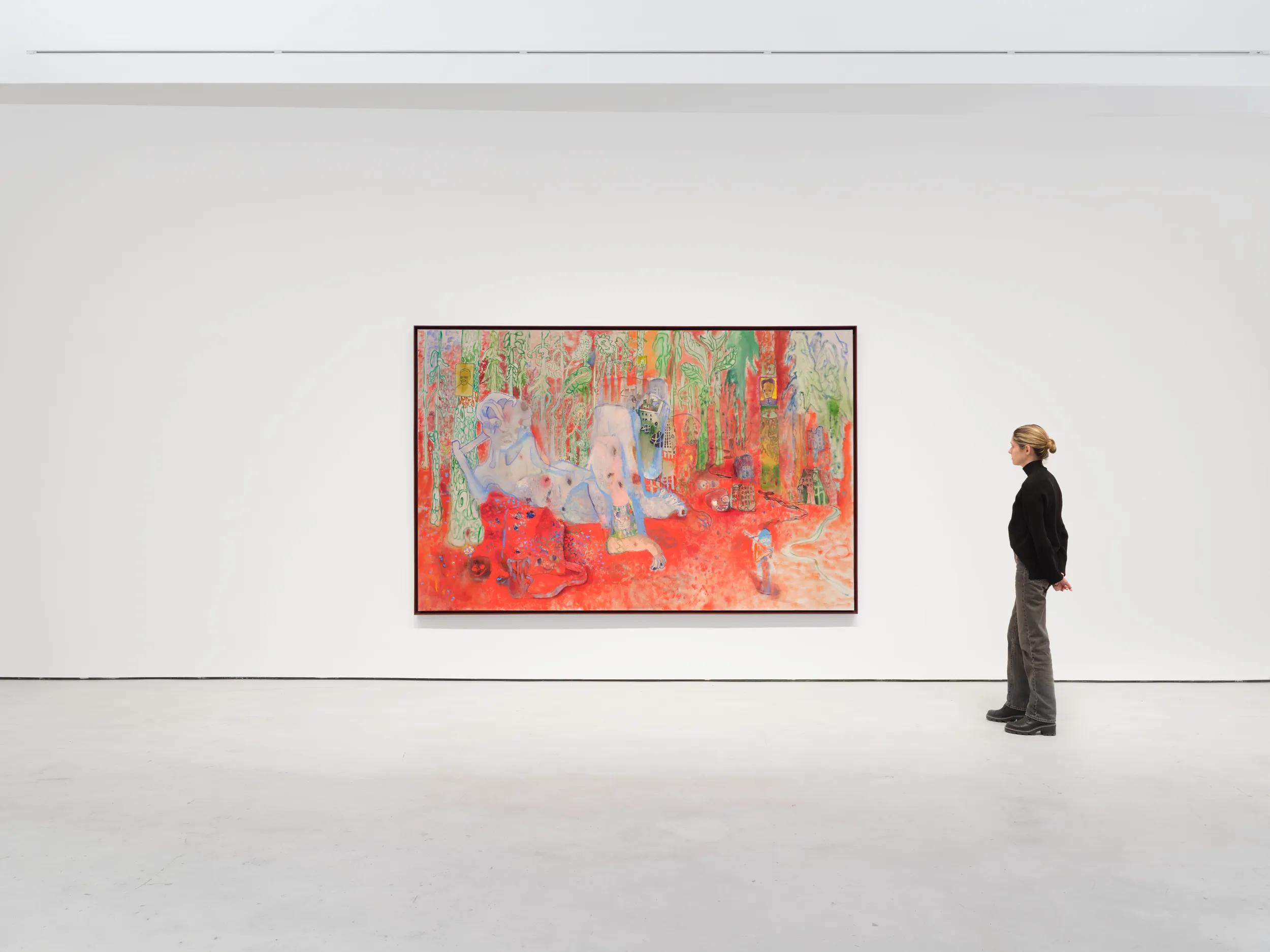
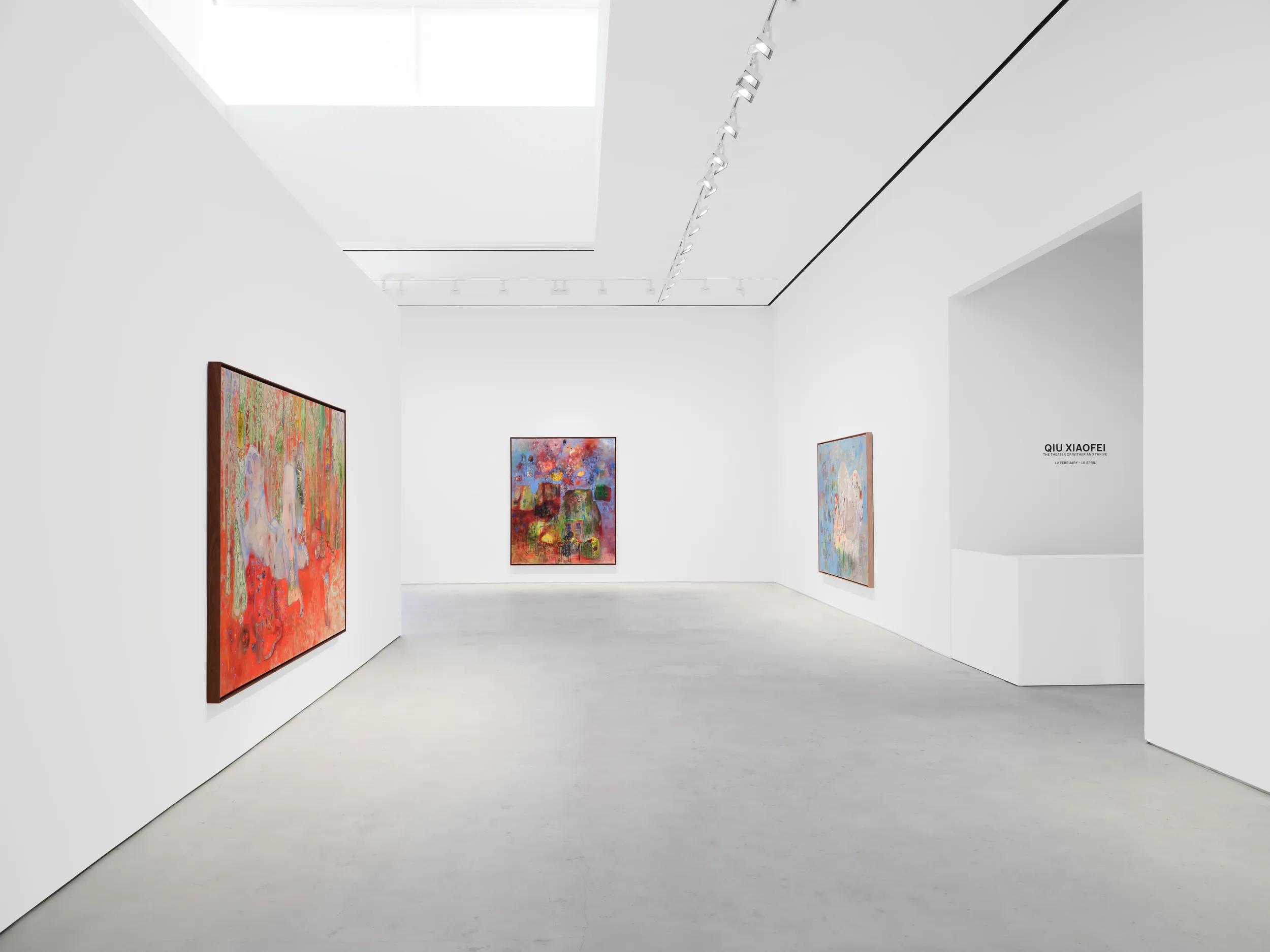
The family photographs Qiu found among his late father’s belongings form the psychological engine of this new body of work. The stories of love and loss captured in heretofore undeveloped rolls of silver-halide film, peeling and oxidized from the passage of time, set in motion the artist’s broader consideration of the cycle of life. The exhibition’s title, ‘The Theater of Wither and Thrive,’ captures the drama inherent in this cycle, and references Qiu’s familial connections to the stage: his grandparents were directors of the Yongfeng Society, the legendary Beijing theater troupe where his father was a painter and set designer. Many of the works on view at Hauser & Wirth—including the painting of a dense red forest that greets visitors entering the gallery and is the exhibition’s namesake—make use of a distorted ground and scale to evoke the flatness of the theater backdrops so familiar to Qiu’s childhood.
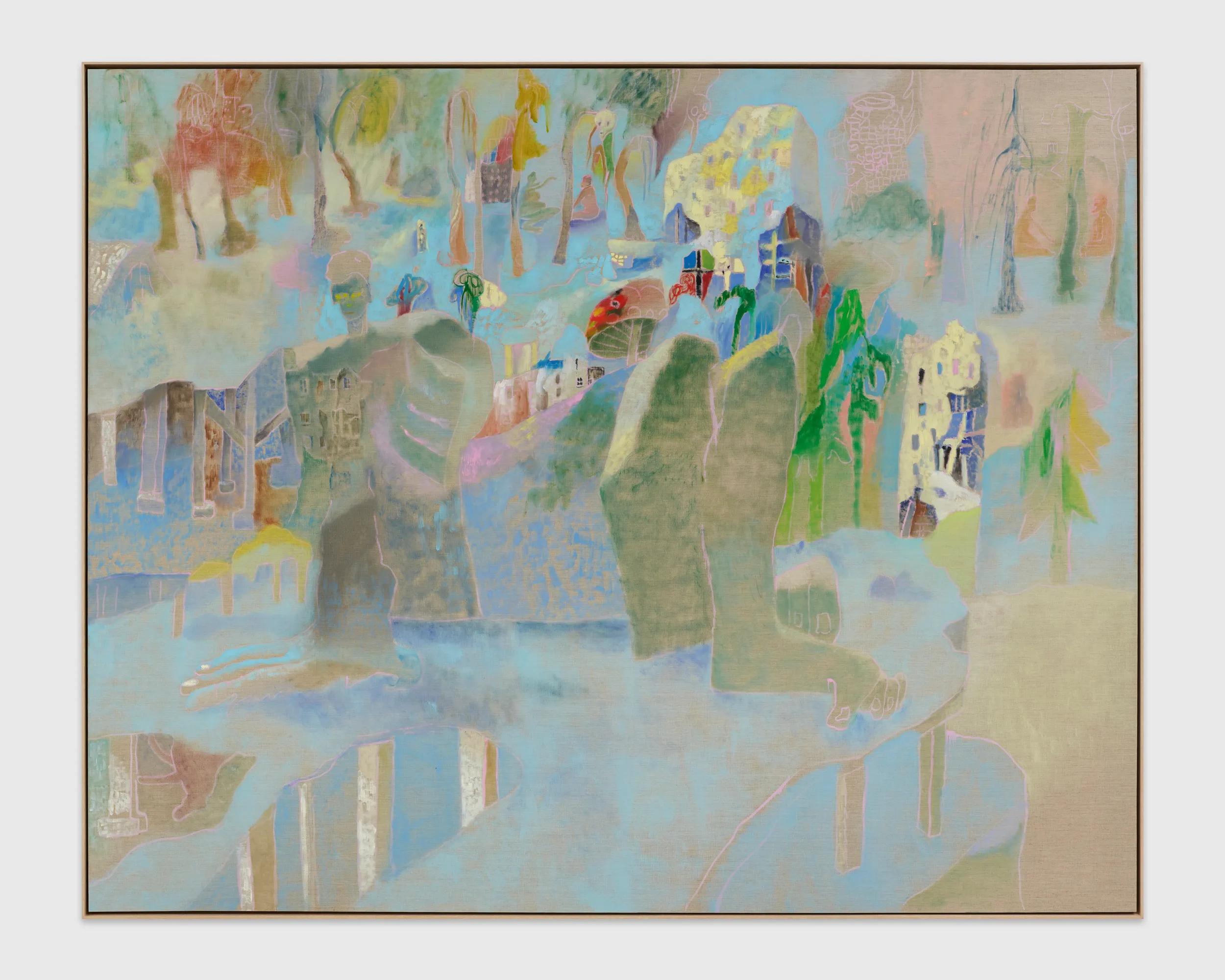
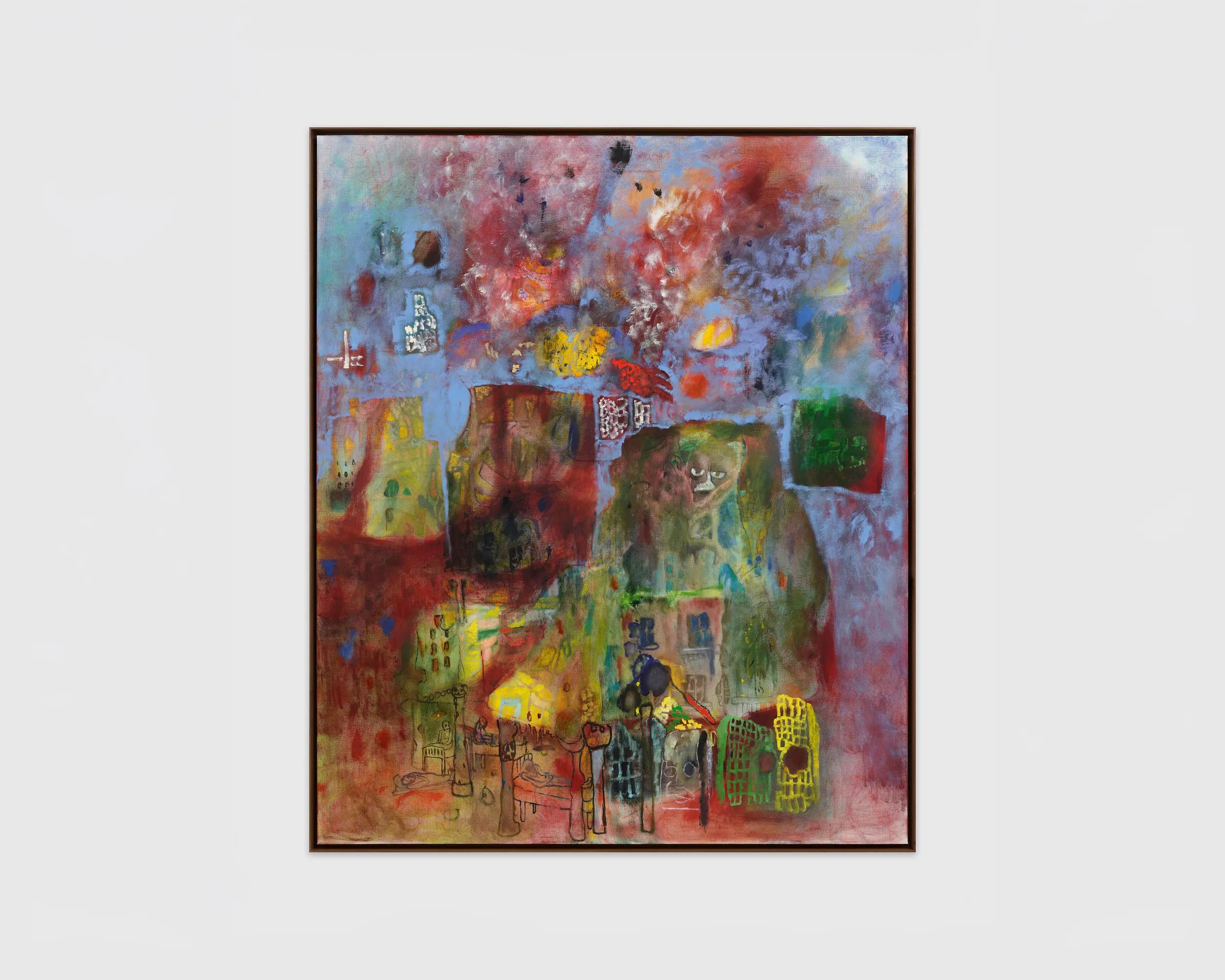
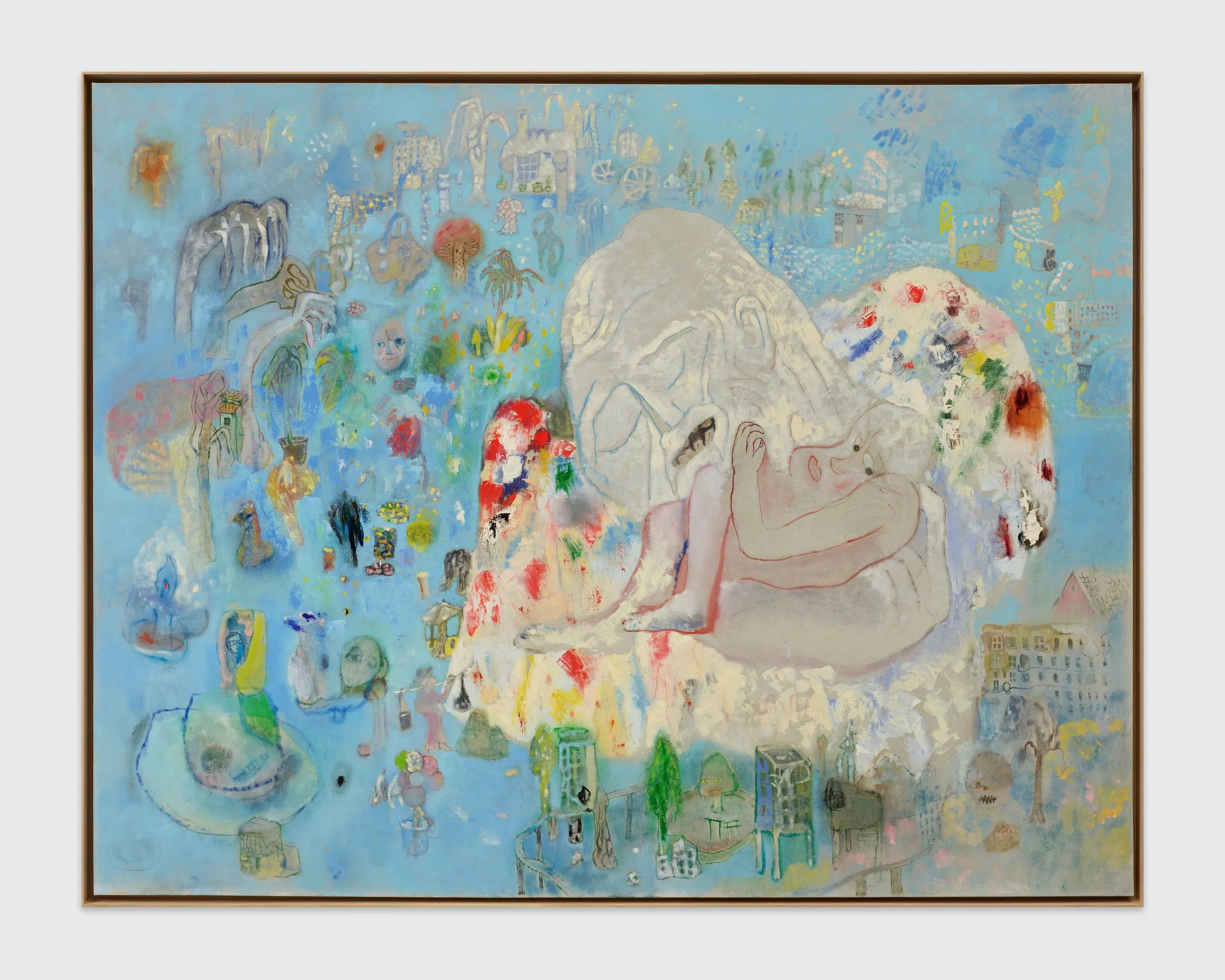
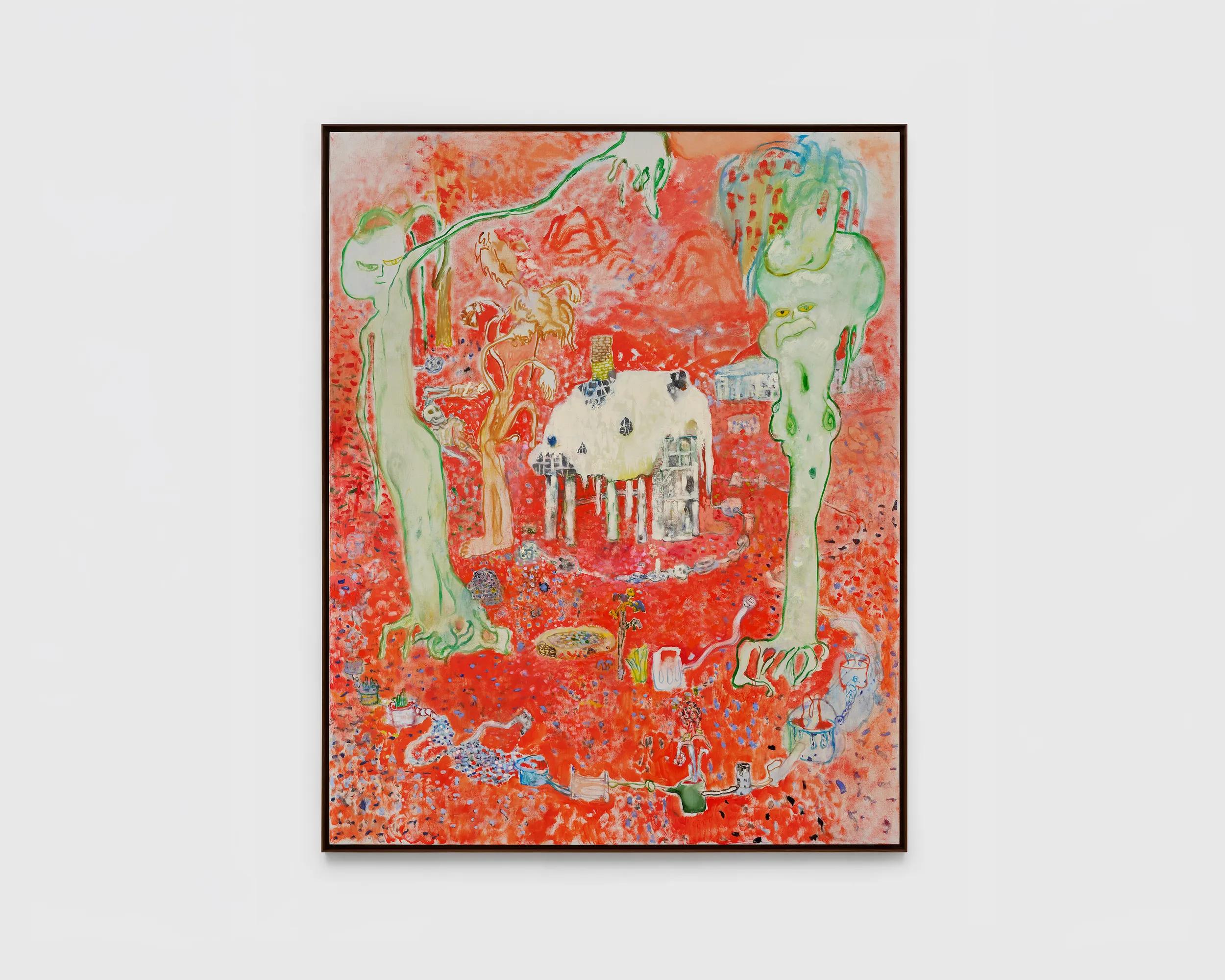
INSTALLATION VIEWS
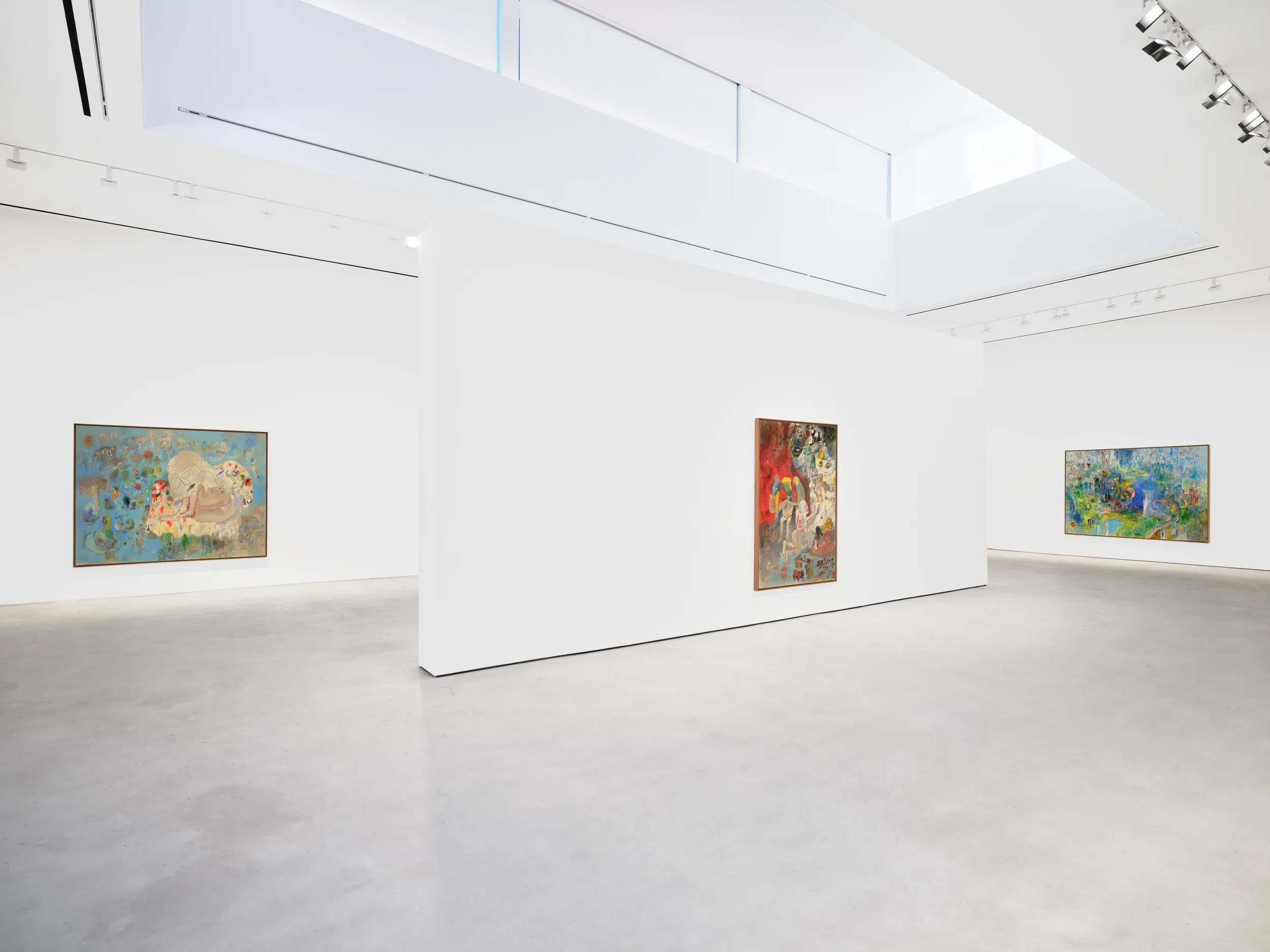
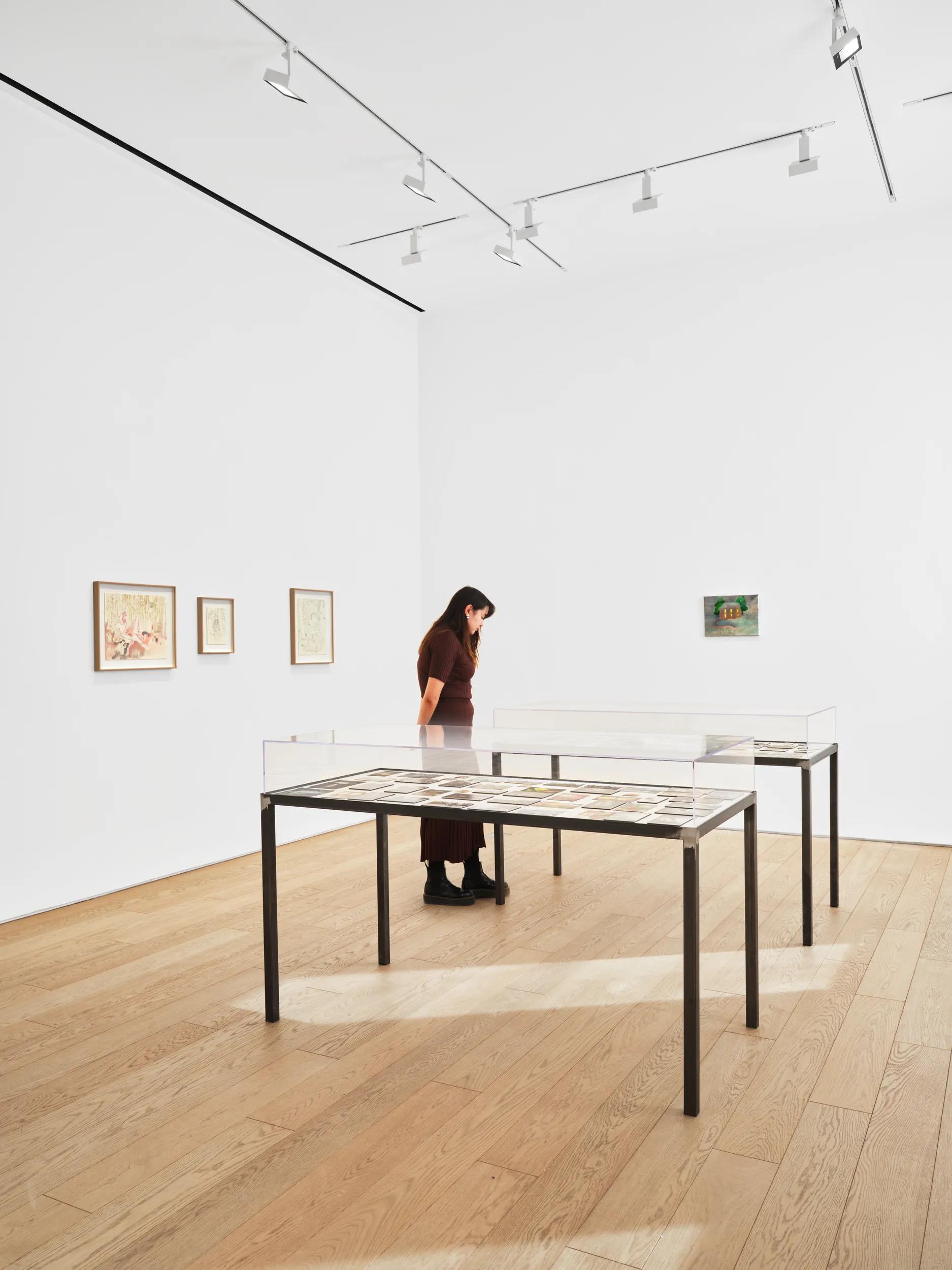
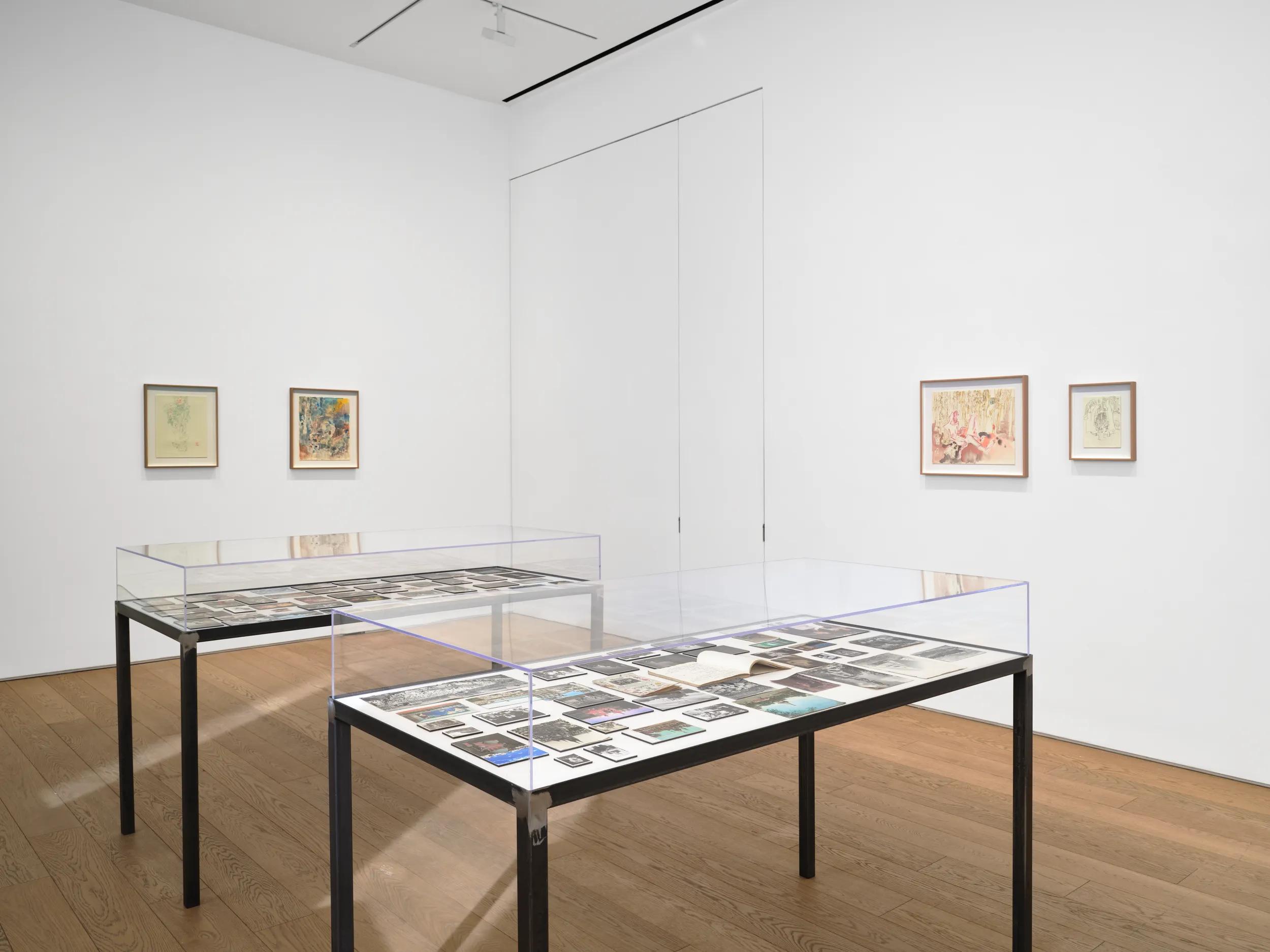
1 / 8
Related Content
About the Artist
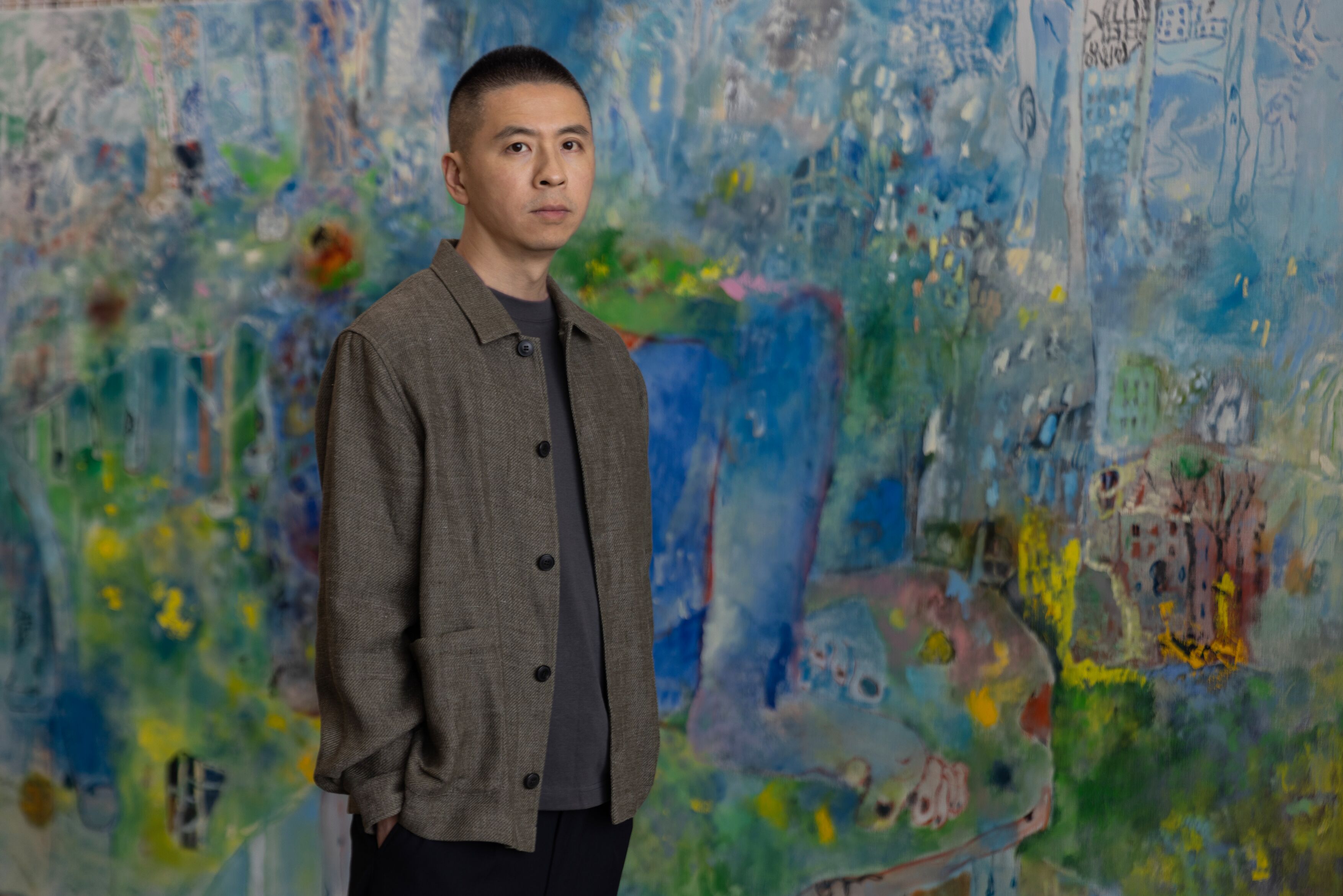
Qiu Xiaofei
Qiu Xiaofei (b. 1977, Harbin, China) lives and works in Beijing. He graduated from Central Academy of Fine Arts, Beijing, in 2002 and came to prominence in the early 2000s as part of a new generation of artists shaping China’s contemporary art scene.
Qiu’s artistic practice is deeply rooted in personal family memories and his complex attachment to his hometown of Harbin. These regional experiences are represented on his canvases as composite spaces of abandoned architecture and natural landscapes, appearing like theatrical backdrops that serve as the core vehicle of his aesthetics. After years of refining his formal language, his focus shifted toward probing the irrational forces within the human psyche: madness, hallucination and other non-rational impulses. Through the medium of painting, he renders his perceptions of contemporary states of mind, while continually negotiating binary oppositions such as growth and death, brilliance and cruelty. His works thus operate as a ceaseless mechanism of transformation between reality and imagination, seeking to unearth the undercurrents that lie beneath everyday appearances.
Formally free, vibrantly colored and psychologically complex, Qiu’s paintings enmesh Eastern and Western cultural references. For the artist, painting is a process that balances bodily perception with intellectual inquiry, toggling recognizable imagery with unexpected shifts in visual perspective to achieve spiritual discipline that expands the boundaries of cognition. Central to Qiu’s practice is the motif of the spiral, a recurring symbol of a non-linear concept of time in which past, present and future overlap and transform one another. As Qiu explains of his layered psychological landscapes, ‘All my paintings point to the same origin, forming an upward-moving spiral. Every new attempt to include experiences of greater complexity incorporates past solutions.’
In recent years, Qiu has delved further into the realms of psychoanalysis, producing works of increasing narrative and conceptual complexity. His seminal series Belovezhskaya Forest (2019–2021) interweaves deconstructed historical figures with family memories in dreamlike compositions where public and private, history and fantasy merge in reflections on cycles of violence, belief and transformation.
His work has been featured in major exhibitions internationally, including at The Metropolitan Museum of Art, New York NY (2025); Centre Pompidou, Paris, France (2024); M+, Hong Kong (2023); UCCA Edge, Shanghai (2022); He Art Museum, Guangdong (2021); Fort Gansevoort, New York NY (2018); Crystal Bridges Museum of American Art, Bentonville AR (2018); Tampa Museum of Art, FL (2014); Museum Boijmans Van Beuningen, Rotterdam, Netherlands (2014); Ullens Center for Contemporary Art, Beijing (2013); The 10th Havana Biennial, Havana, Cuba (2009); Tate Liverpool, Liverpool, UK (2007); ZKM | Museum of Contemporary Art, Karlsruhe, Germany (2007); and Kunstmuseum Bern, Switzerland (2005).
Current Exhibitions


1 / 10